


What Is Cubism Art Today? Fragmentation in Contemporary art

Updated: Apr 20
Cubism Art Today is not a retrospective look at a historical movement it is an active, evolving field within contemporary art. The idea of fragmentation that once revolutionized Cubism has entered a new phase today: more emotional, more figurative, and closely connected to the visual culture of our time.
It is precisely at this point that Fragmented Cubism Art emerges a contemporary development of cubist principles that connects classical art history with today’s visual language.
Who Is Mr. Pinkbrush – and What Is Fragmented Cubism Art?
Mr. Pinkbrush is the artistic name of contemporary painter Fabian Frohly, whose work explores Fragmented Cubism as a distinct contemporary position.
Mr. Pinkbrush is an internationally active contemporary painter whose work is based on Fragmented Cubism Contemporary Painting – an independent painterly approach that combines cubist fragmentation with contemporary figurative and cartoon-inspired visual language.
At its core, the work is not about abstraction for its own sake, but about the deconstruction of identity, emotion, and perception. Figures, faces, and iconic forms are fragmented, reassembled, and painterly condensed – always realized as original paintings on canvas.
Fragmented Cubism Art is not a quotation of historical Cubism, but its consequent evolution in the 21st century.
The Roots of Cubism – Why Fragmentation Was Revolutionary
Cubism emerged at the beginning of the 20th century through artists such as Pablo Picasso and Georges Braque. Their radical approach rejected the idea of depicting objects from a single fixed viewpoint, instead presenting them simultaneously from multiple perspectives.


This deliberate fragmentation of form and space challenged classical central perspective and fundamentally changed the act of seeing. Reality was no longer represented – it was analyzed, broken down, and reconstructed.

Cubism Art Today – Why Cubism Is Relevant Again
Today, Cubism is experiencing renewed relevance. In a world of fragmented perception–shaped by rapid image flows, symbols, and cultural overlaps–the cubist idea feels more contemporary than ever, as seen in the works of artists such as George Condo, Patrick Akpojotor, and Fabian Frohly - Mr. Pinkbrush, who translate fragmentation into distinct contemporary figurative languages.
Contemporary artists use fragmentation as a conceptual model:
• Identity is no longer understood as a unity, but as a layered construct
• Figures are not idealized, but emotionally fractured
• Pictorial space is created through overlay rather than depth

This is where Cubism Art Today clearly differs from its historical predecessor:
fragmentation becomes psychological, narrative, and figurative.

Fragmented Cubism Meets Contemporary Cartoon Art
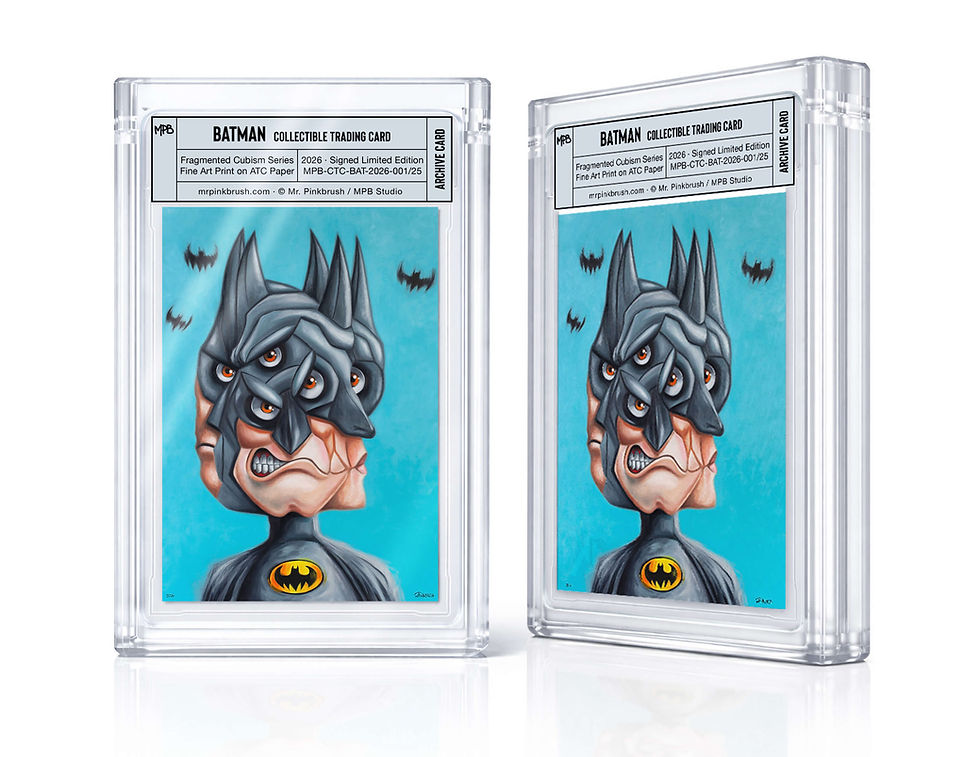
A decisive step in the contemporary evolution of Cubism is the fusion of Fragmented Cubism with Contemporary Cartoon Art.
While classical cubist works often appeared strictly analytical, today’s artists draw from iconic, culturally charged imagery:
• reduced, clearly defined figures
• references to collective pop culture
• deliberately simple forms with emotional depth
In the Fragmented Cubism Art of Mr. Pinkbrush, these elements are not used decoratively but conceptually reframed. Cartoon-like figures become projection surfaces for identity, strength, vulnerability, and zeitgeist – fragmented through cubist structures and reassembled with painterly precision.

What Makes Fragmented Cubism Art Unique Today
Fragmented Cubism Art clearly distinguishes itself from classical Cubism and pure Pop Art:
• Figurative fragmentation instead of pure abstraction
• Contemporary iconography rather than historical motifs
• High-precision painting on canvas
• Emotional readability despite formal complexity

This combination positions Fragmented Cubism Contemporary Painting as a rare and clearly defined presence in today’s art market, beyond decorative trends and firmly situated within the international contemporary art context.
Why Collectors Are Drawn to Contemporary Cubism
Collectors and galleries today are seeking works that:
• are rooted in art history
• possess an independent visual language
• address contemporary themes without becoming illustrative

Fragmented Cubism Art fulfills these criteria precisely. It connects avant-garde thinking with contemporary visual culture, creating works that are intellectually engaging and visually powerful.
Cubism Art Today – From Avant-Garde to the Present
Cubism Art Today demonstrates that Cubism is not a closed chapter, but an evolving
force in contemporary art.
In the Fragmented Cubism of Mr. Pinkbrush, it becomes clear how the fundamental
idea of fragmentation can evolve – from pure analysis toward emotional, figurative,
and contemporary painting.
Explore Fragmented Cubism paintings by Mr. Pinkbrush
Further Reading on Contemporary Art, Collectible Formats & Fragmented Cubism
For a deeper understanding the emergence of Collectible Trading Cards in Art and the growing field of Contemporary Art Collectibles, see:
The role of editions and the rapid rise of Contemporary Art Collectibles is explored further in:
For a deeper insight into Fragmented Cubism and its position within Contemporary Figurative Painting, see:


Comments